Your website is not just a digital storefront. It's your startup's first impression, your 24/7 sales representative, and increasingly, your competitive advantage. Yet many founders rush this decision, treating web development as a checkbox rather than a strategic investment.
The stakes are real. A poorly built website costs you credibility, conversions, and potential customers every single day. According to recent research, 38% of users abandon websites that load slowly, and 75% judge a business's credibility based on website design quality. Worse, rebuilding a bad website wastes both time and money you can't afford to lose at an early stage.
Understanding Your Startup's Web Development Needs
Before you evaluate a single agency, you must first understand what you actually need. There are three fundamental paths to getting a website:
- •DIY Website Builders (Wix, Squarespace): Low cost, high time investment. Good for MVP validation.
- •Freelance Developers: Moderate cost, variable quality. Good for specific tasks but risky for full platforms.
- •Web Development Agencies: Higher cost, high accountability. Best for growth-stage startups needing comprehensive solutions.
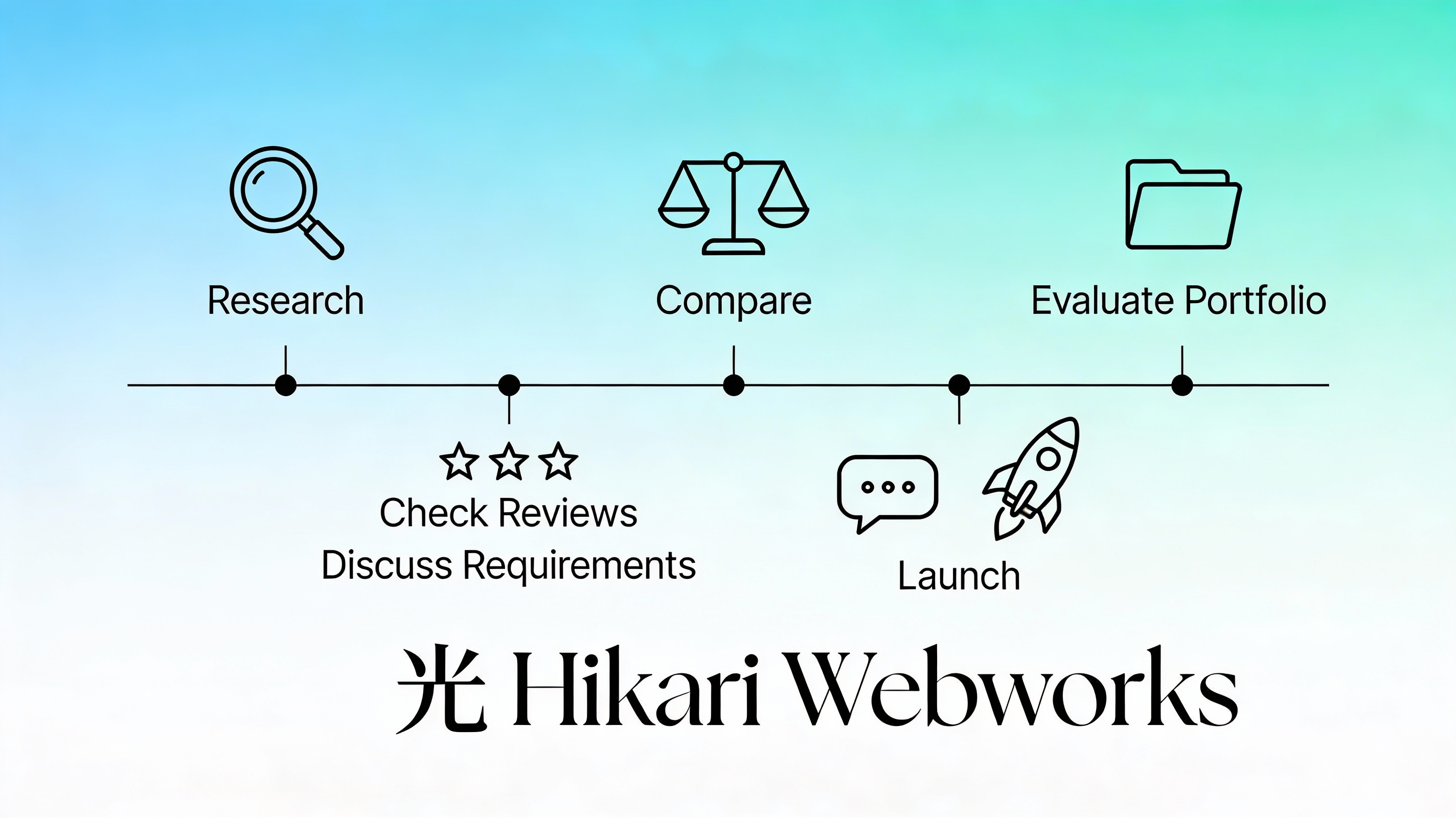
What to Expect: Timeline, Costs, and Resource Allocation
Unrealistic expectations destroy more client relationships than poor execution. Typical costs for a professional startup website range from $8,000 to $15,000 for a brochure site, and $35,000+ for complex SaaS MVPs. Timelines generally span 6-14 weeks depending on complexity.
Red Flags in Web Development Agencies
- •Red Flag 1: "We can launch your complete website in 3 weeks" (Impossible without cutting quality)
- •Red Flag 2: Vague communication and no defined process
- •Red Flag 3: Unwillingness to discuss budget until the final sales call
- •Red Flag 4: Portfolio contains only outdated projects or no results metrics
Critical Questions to Ask Before Signing
After your initial conversations, ask detailed questions about their process: "How many revision rounds are included?", "What happens if we want to change direction mid-project?", and importantly, "What is included in your post-launch support?"
The best outcomes happen when you approach this as a partnership, not a vendor purchase. You are choosing advisors who invest in your success.