
Manual medical transcription slows clinics down. Voice notes sit in queues, staff retypes data into EMR systems, and clinicians lose time waiting for documentation. Medical transcription automation changes that by turning transcription into a structured, tracked, and routed workflow.
Why Manual Transcription Breaks at Scale
- •Turnaround delays stretch from hours into days.
- •Human-only routing creates QA bottlenecks.
- •Manual EMR entry creates avoidable mistakes.
- •Clinicians wait too long to review and approve notes.
How the Automation Works
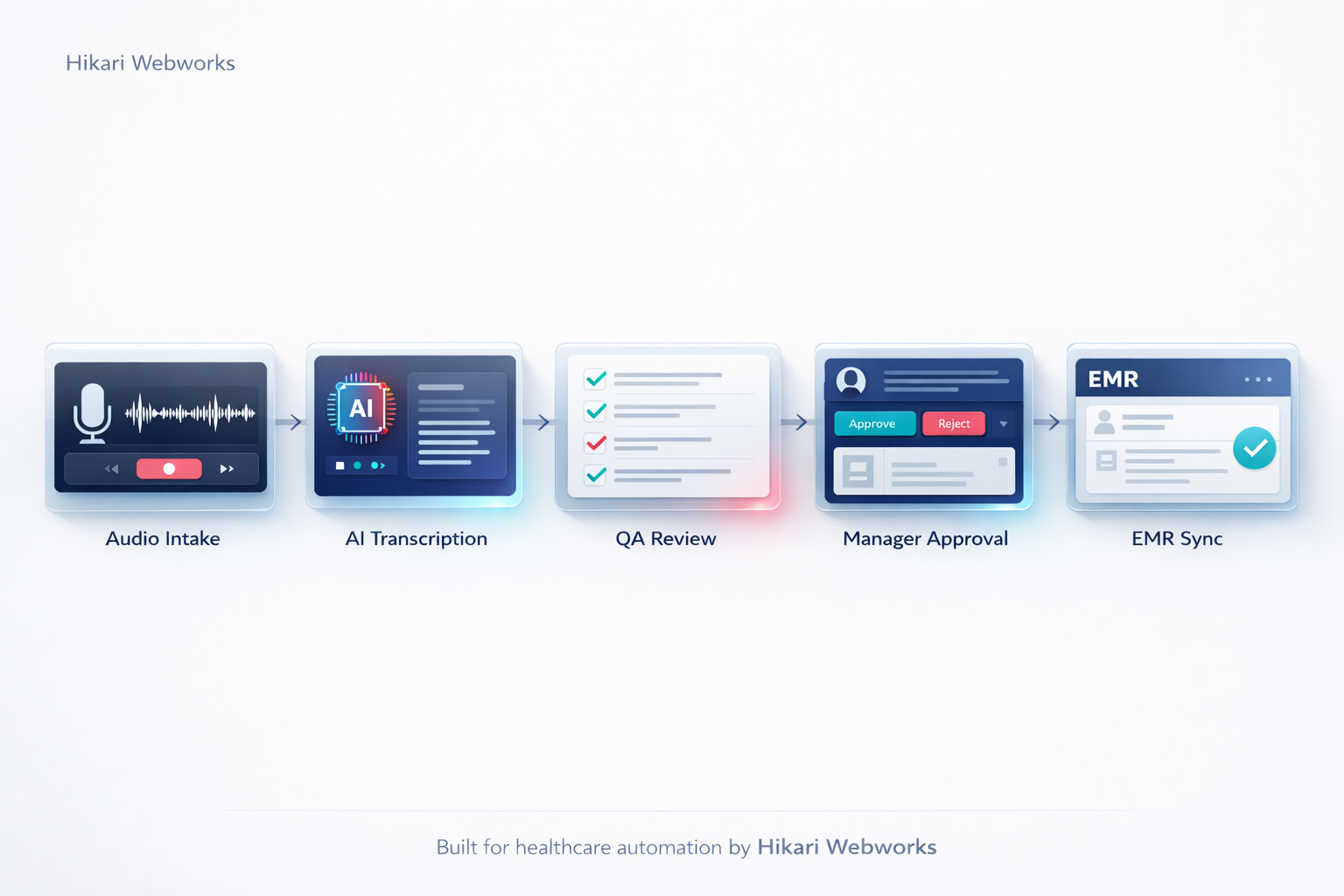
The workflow is simple to describe but powerful in practice: ingest audio, transcribe with AI, run QA review, route to the manager for approval, and deliver the final output to the EMR without manual re-entry.
- •Multi-source ingestion through FTP or cloud storage.
- •Deepgram and AssemblyAI for speech-to-text processing.
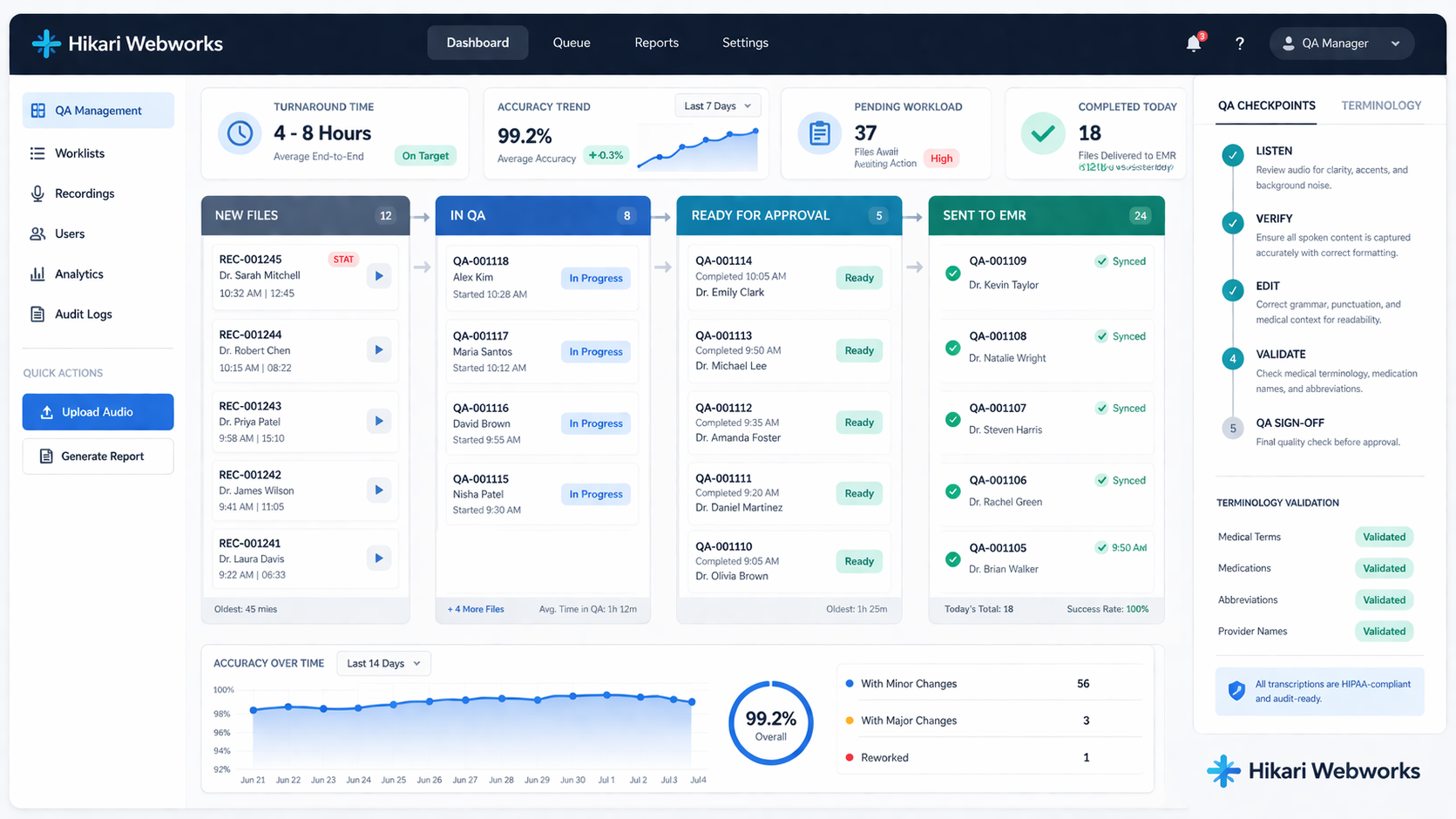
- •QA checkpoints for accuracy and terminology review.
- •Manager dashboard for assignment and monitoring.
- •Direct EMR delivery using structured handoff logic.
Business Impact
- •Up to 70% lower transcription process cost.
- •4-8 hour turnaround instead of 2-3 days.
- •Less manual EMR work for staff.
- •Better consistency across specialty workflows.
Who This Helps Most
- •Multi-physician clinics with recurring documentation backlog.
- •Healthcare companies that need a more controlled QA process.
- •Teams that want workflow visibility instead of spreadsheet tracking.
- •Operators looking to reduce clerical overhead without losing quality control.